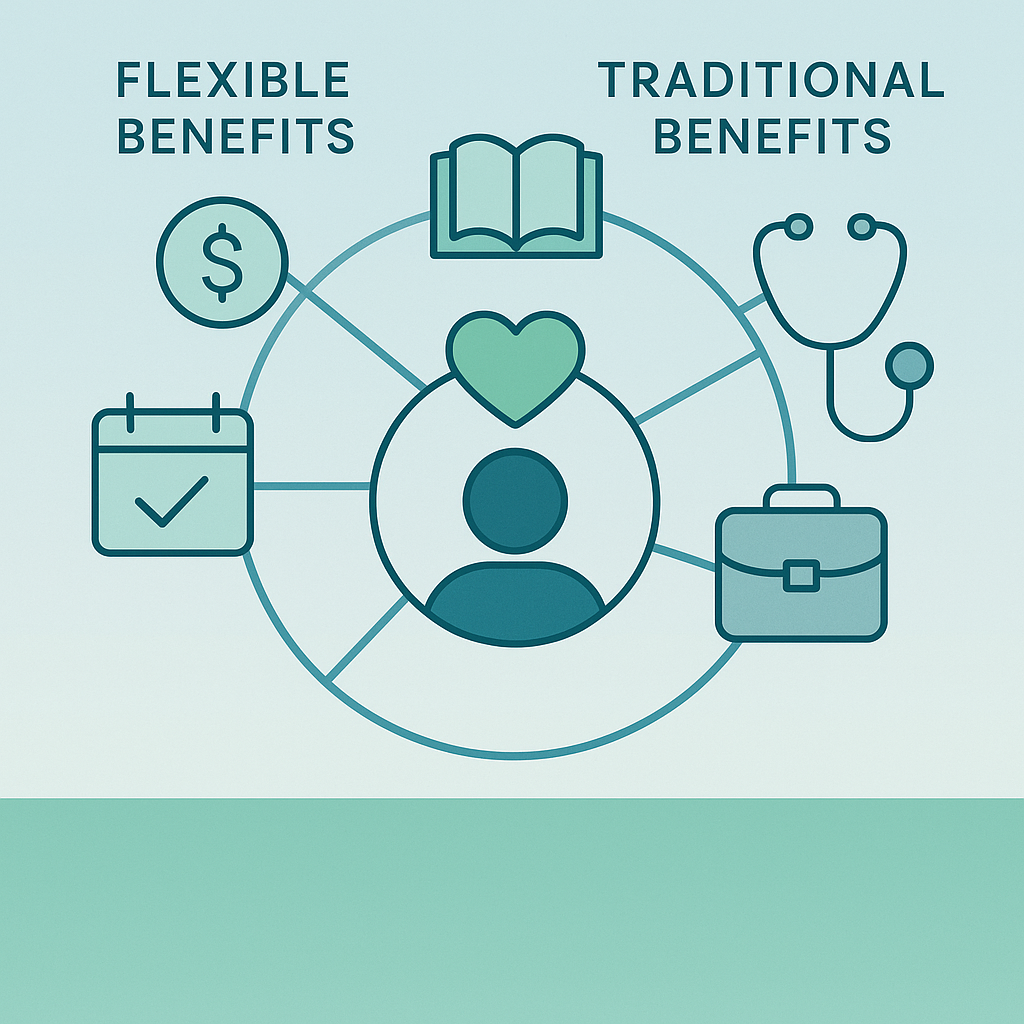

Rising premiums and rigid plan structures are pushing many Canadian small business owners to question whether traditional group insurance is still the right fit. A Health Spending Account for small business teams offers a fundamentally different approach: employers set a fixed dollar amount per employee, and each person decides how to spend it on CRA-eligible health expenses. For companies with fewer than 50 employees, this flexibility can mean the difference between offering competitive small business health benefits and offering nothing at all. The real question for most small businesses is narrower and more answerable: does an HSA alone cover enough ground, or does the team also need a lean group plan for catastrophic risks like disability or life insurance?
Key Takeaway: HSAs give small businesses predictable costs and employees genuine choice over their health spending, making them a strong standalone option or a powerful complement to traditional group insurance.
Before comparing costs or flexibility, it helps to understand what each option actually does. Traditional group insurance operates on a pooled-risk model where an insurer covers a defined set of benefits for all enrolled employees, and the employer pays premiums that can fluctuate year over year. A Health Spending Account, Canada employers can offer works differently: the employer allocates a set amount per employee, and funds are used to reimburse CRA-eligible medical expenses after the fact.
Group insurance bundles coverage categories like dental, vision, prescription drugs, and paramedical services into a single plan. The insurer sets premiums based on the group's demographics, claims history, and risk profile. For small teams, this pooling can be a disadvantage. A single high-cost claim from one employee can trigger a premium increase at renewal that affects the entire company. Small businesses with fewer than 10 employees often face the steepest rate volatility because the risk pool is too small to absorb outlier claims without adjustment.
This volatility compounds over time. A single employee's cancer treatment or major surgery in year one can raise renewal rates in year two, even if no other claims occur — and because small groups lack the statistical scale to average outlier events across a large pool, that increase often persists for multiple renewal cycles rather than resetting once the claim resolves. This is the specific mechanism behind the '10% to 25% at renewal' swings small business owners describe, and it's structurally different from how an HSA's cost behaves, since an HSA has no claims history to react to.
An HSA flips the model. Instead of paying premiums to an insurer, the employer deposits a fixed annual allowance into each employee's account. Employees then submit claims for expenses that qualify under the CRA's list of eligible medical expenses, which includes dental care, prescription eyewear, physiotherapy, mental health counseling, and hundreds of other services. Because there is no insurer setting premiums, there are no annual rate hikes tied to claims history. The employer's cost is exactly what they allocate, nothing more. This predictability is one of the strongest reasons small businesses explore HSAs as a primary benefits vehicle.
The HSA vs traditional group insurance decision ultimately comes down to three factors: what it costs the employer, how much choice employees get, and whether the coverage meets the team's actual needs. Each factor plays out differently depending on team size, industry, and workforce demographics.
Traditional group insurance premiums for small businesses in Canada commonly fall in the range of $150 to $300 per employee per month, though the exact figure depends heavily on plan design, province, and group demographics. A benefits broker or insurer quote is the only way to get a number specific to your team. Premiums tend to increase 8% to 15% annually, and employers have limited ability to negotiate once locked into a plan. HSAs, by contrast, let the employer set an annual cap per employee. A company might allocate $1,500 per person per year and know with certainty that its total benefits spend will not exceed that figure. Because employers set the exact allocation upfront, spending is capped by design rather than by claims-driven premium adjustments, a structural difference from insurance that gives finance teams a hard ceiling on cost rather than a moving target. For employers in Ontario and Quebec, where benefits costs are among the highest in the country, this kind of budget certainty is especially valuable.
Fixed annual allocation: Employers decide the exact dollar amount each employee receives, with no surprise invoices
No premium escalation: HSA costs stay flat unless the employer voluntarily increases the allocation
Tax efficiency: HSA contributions are a deductible business expense and a non-taxable benefit for employees
No minimum participation: Unlike group plans, HSAs do not require a minimum number of enrolled employees
Rollover options: Some providers allow unused funds to carry forward, reducing waste
One of the biggest limitations of traditional group insurance is that every employee gets the same plan regardless of their individual health needs. A 25-year-old single employee and a 45-year-old parent of three receive identical coverage categories, even though their priorities differ completely. HSAs solve this by letting each employee allocate their funds toward whatever CRA-eligible expenses matter most to them. That could mean orthodontics for one person, weekly physiotherapy for another, and mental health counseling for a third. The breadth of eligible expenses under a Health Spending Account is significantly wider than most group plans, which often cap paramedical visits or exclude categories entirely. In Canada, the gap between what provincial health plans cover and what employees actually need continues to grow. Statistics Canada data shows that Canadians shoulder a meaningful share of their own medical expenses, and flexible health spending accounts help bridge that gap more effectively than rigid group plans.
The right answer depends on workforce composition, budget constraints, and how much administrative complexity the employer is willing to manage. Neither option is universally better. The strongest benefits strategies often combine elements of both.
For businesses with fewer than 20 employees, an HSA as the sole benefits offering is often the most practical path. These companies typically face the highest per-employee premiums under group insurance because the risk pool is small, and they may not meet minimum enrollment requirements that insurers impose. An HSA removes both obstacles. It also works well for teams with diverse demographics. When a workforce spans different ages, family structures, and health priorities, a one-size-fits-all group plan inevitably leaves some employees underserved. An HSA lets each person direct funds where they get the most value.
Businesses operating in Quebec face additional considerations around provincial regulations and tax treatment of benefits. An HSA structured through a qualified provider ensures compliance with both federal CRA rules and provincial requirements. Similarly, employers in Ontario looking for cost-effective employee benefits will find that HSAs offer a straightforward way to provide meaningful coverage without the overhead of negotiating with insurers.
Companies that want catastrophic coverage, such as life insurance, long-term disability, or high-cost drug coverage, still need a traditional insurance component. These are risk-transfer products that an HSA cannot replicate because HSAs reimburse expenses after the fact rather than pooling risk against major events. The hybrid model pairs a lean group insurance plan covering major risks with an HSA that handles everyday health expenses. This combination gives employees both a safety net and spending flexibility. GoKlaim simplifies this hybrid setup by integrating HSA administration alongside existing group plans, so employers manage everything from one platform. Statistics Canada research on household health expenditure trends confirms that out-of-pocket costs have risen steadily across income levels, reinforcing why supplemental spending accounts are becoming standard practice rather than an optional perk.
Getting started with an HSA is considerably simpler than implementing a group insurance plan. There is no medical underwriting, no waiting periods for pre-existing conditions, and no complex negotiations with insurance carriers. The process typically involves four steps.
Selecting the right small business HSA provider matters because the platform determines how easily employees can submit claims, how quickly reimbursements are processed, and how much visibility the employer has into usage. Look for providers that offer transparent pricing, a mobile app for claim submissions, and the ability to customize benefit categories and allowances per employee or department. GoKlaim, for example, lets employers set individual allocations, enable or disable specific expense categories, and track spending through a real-time dashboard. Once the provider is selected, employers define the annual allocation per employee, decide whether unused funds roll over, and communicate the benefit to their team. Most providers handle the CRA compliance requirements automatically, so the employer does not need specialized tax or benefits expertise.
Employees new to HSAs often have questions about what qualifies as an eligible expense. The CRA maintains a comprehensive list that includes dental services, prescription medications, vision care, physiotherapy, chiropractic treatment, mental health therapy, medical devices, and many more categories. Employers should share this list during onboarding and make it accessible through the benefits platform. The claim process itself is straightforward: employees pay for a qualified health expense out of pocket, submit the receipt through the provider's app or portal, and receive reimbursement directly to their bank account. Most modern platforms process claims within a few business days, making the experience seamless for employees accustomed to the slower pace of traditional insurance claim adjudication.
The choice between an HSA and traditional group insurance is not about finding a single correct answer. It is about matching the benefits structure to the size, budget, and workforce composition of the business. HSAs deliver cost predictability, employee choice, and administrative simplicity that traditional plans struggle to match for small teams. For employers who also need catastrophic or risk-transfer coverage, combining a lean group plan with an HSA covers both bases effectively. The most important step is evaluating what the team actually needs, then building a benefits strategy that reflects those realities rather than defaulting to the most familiar option.
Ready to explore flexible health benefits for your team? Get started with GoKlaim and see how an HSA can work for your small business.
Yes, any incorporated small business in Canada can offer an HSA to employees, with no minimum team size or enrollment requirements.
HSAs provide better cost control and flexibility for small teams, while group insurance is better suited for catastrophic risk coverage like life insurance and long-term disability.
The cost is whatever annual allocation the employer sets per employee, typically ranging from $500 to $3,000 per person, plus a small administration fee charged by the provider.
Many HSA providers allow unused funds to roll over to the following benefit year, though rollover policies vary by provider and plan configuration.
CRA-eligible expenses include dental care, prescription drugs, vision care, physiotherapy, mental health therapy, medical devices, and hundreds of other qualifying medical services.
In Canada, an HSA reimburses CRA-eligible medical expenses with tax-free dollars, while a flexible spending account (often called a WSA or LSA) can cover broader lifestyle and wellness expenses that may not qualify as medical deductions.
HSAs offer fixed costs, no premium increases, and personalized spending, whereas group insurance pools risk and provides standardized coverage that may not match each employee's individual needs.