Canadian employers are under more pressure than ever to build benefits packages that actually work for their people, not just look good on paper. Fixed group insurance plans served a generation of workers well, but today's workforce spans multiple generations, life stages, and health priorities that a one-size-fits-all structure simply cannot accommodate. A 28-year-old focused on mental health support has different needs than a 45-year-old managing a family's dental and vision expenses, and benefits design needs to reflect that reality. The gap between what fixed plans offer and what employees actually need has quietly become one of the most significant drivers of benefits dissatisfaction in Canadian small and mid-sized businesses.
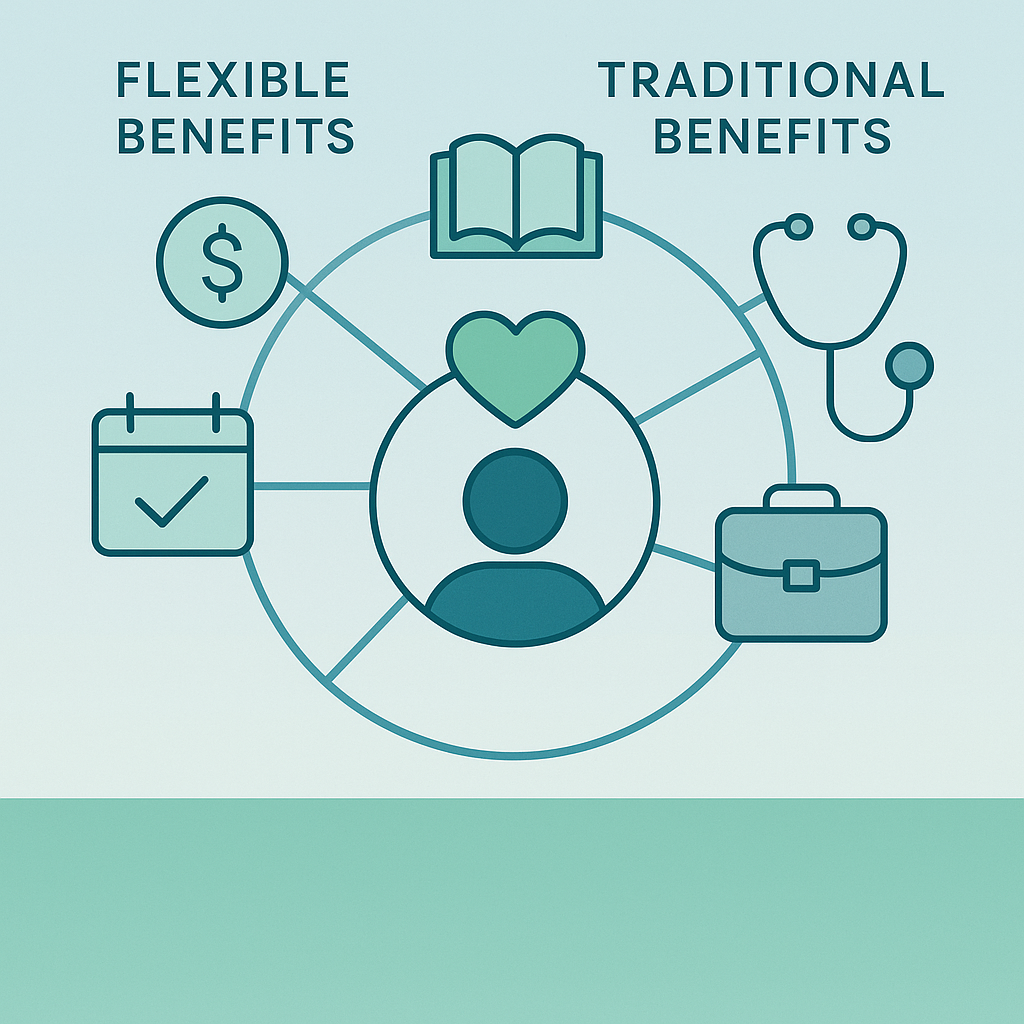
Before comparing their merits, it helps to be clear about what each model actually delivers. Fixed group insurance plans bundle a predetermined set of covered services, typically dental, vision, life, and extended health, under a single premium structure. Every employee gets the same coverage regardless of whether it matches their life. Flexible benefit plans, by contrast, allocate a defined dollar amount that employees can direct toward the expenses that matter most to them.
Traditional group insurance plans are purchased through carriers that set the coverage categories, reimbursement rates, and eligible expenses. Employers choose a plan tier, pay a monthly premium per employee, and the insurer handles claims directly. The structure is straightforward to set up, but it locks employers into categories that may not reflect their team's actual usage patterns.
A flexible benefits platform gives each employee an annual or monthly allowance held in a spending account, such as a Health Spending Account (HSA) or Wellness Spending Account (WSA). Employees submit claims for eligible expenses, which are reimbursed from their individual balance. Employers set the total budget and define which categories are eligible, keeping full control over spend without being tied to carrier pricing.
The structural differences between fixed and flexible plans have real downstream effects on cost management, employee satisfaction, and administrative workload. Understanding where those divergences hit hardest helps employers make a more confident decision about which model fits their business.
With a fixed group plan, employers pay premiums regardless of whether employees use the benefits. A team where half the workforce skips dental visits all year still generates the same premium cost. Flexible spending accounts vs. group benefits present a fundamentally different cost dynamic: employers only pay when employees actually claim. That shift from premium-based to usage-based spending can meaningfully reduce waste, particularly for smaller companies with leaner margins.
For small and mid-sized businesses evaluating affordable employee benefits solutions, the predictability of a capped HSA or WSA allowance is often more valuable than the broad but partially used coverage of a fixed plan. Employers set the ceiling. Employees spend within it. There are no renewal surprises tied to claims history because there is no insurer setting rates based on your team's health behavior.
Benefits satisfaction is closely tied to perceived relevance. Employees who feel their benefits reflect their actual lives are more likely to use them, value them, and stay with an employer who offers them. Research from Benefits Canada consistently points to flexibility and customization as key drivers of benefits satisfaction in multigenerational workplaces.
Fixed plans often create a mismatch between coverage and need. An employee who prioritizes therapy and gym access over dental care receives little practical value from a plan weighted toward traditional health services. Customizable employee benefits allow each person to direct their allowance toward what genuinely supports their wellbeing, which translates directly into higher perceived value without increasing the employer's total spend.
Fixed plans involve ongoing coordination with insurance carriers, paper-based or portal-based claim adjudication, and renewal negotiations that can consume significant HR bandwidth. The process is familiar but not efficient. Benefits administration simplified through modern software platforms removes much of that friction: employers configure their plan once, employees submit claims through an app, and reimbursements process automatically.
The shift toward employee benefits software has made flexible plan management accessible to companies without dedicated benefits administrators. Real-time dashboards, automated approvals, and digital claim submission reduce the back-and-forth that typically slows down fixed plan administration, freeing HR teams to focus on higher-value work.
Fixed group insurance plans still have a place, particularly for organizations with stable, homogenous workforces that rely heavily on traditional health coverage. But for most Canadian small and mid-sized businesses navigating a multigenerational team and tight budgets, the case for flexible benefit plans for businesses is hard to ignore. The ability to control total spend, let employees direct their own coverage, and manage everything through an intuitive platform addresses the three biggest pain points of traditional benefits design simultaneously. Platforms like GoKlaim make it practical to offer HSAs, WSAs, and rewards programs without the complexity or cost escalation of a fixed carrier plan, and with far greater relevance to employees across every life stage. If your current benefits setup is generating low utilization, rising renewal costs, or quiet dissatisfaction, that is a signal worth acting on rather than waiting until the next renewal cycle.
Explore how GoKlaim can replace or complement your current group plan: visit GoKlaim.com to see the platform in action.
A flexible benefits platform is a digital system that allows employers to allocate individual spending allowances to employees, who can then claim reimbursement for eligible health, wellness, or lifestyle expenses rather than being locked into a fixed set of covered services.
Companies that offer employee benefits flexibility report higher utilization rates and stronger employee satisfaction because workers can direct their allowances toward expenses that genuinely reflect their personal health and lifestyle priorities.
Yes, flexible benefits administration platforms are specifically designed to be accessible for small businesses, with flat-rate pricing and minimal setup that removes the need for a dedicated HR or benefits specialist.
Under CRA guidelines for Health Spending Accounts, eligible expenses typically include medical, dental, vision, prescription drugs, mental health services, and other costs defined under the Income Tax Act as medical expenses.
For most Canadian SMBs with diverse, multigenerational teams, customizable benefits vs. fixed plans offer a stronger return because they eliminate premium waste, improve perceived value, and give employers direct control over spending without carrier-imposed renewal increases.
HSA reimbursements are generally received tax-free by employees when the plan is structured correctly, while the CRA's employer guide on taxable benefits provides the definitive rules on which employer-provided benefits qualify for non-taxable status.