The Canadian workforce has shifted dramatically over the past decade, and the one-size-fits-all approach to employee benefits no longer holds up. A flexible benefit plan gives employers the ability to offer customizable employee benefits that reflect the diverse needs of their teams, whether those needs center on dental care, mental health support, gym memberships, or professional development. For HR managers and business owners across Ontario, British Columbia, Alberta, and Quebec, understanding how flexible benefits in Canada work is no longer optional. It is a competitive requirement, and the gap between employers who offer rigid plans and those who offer adaptable ones is widening every quarter.
Flexible benefits refer to employer-sponsored programs that allow employees to allocate a set allowance toward the health, wellness, and lifestyle expenses that matter most to them. Unlike traditional group insurance, where every employee receives the same coverage regardless of personal circumstances, a flexible benefit plan puts choice in the hands of the individual. This model has gained traction across Canada as workforce demographics grow more diverse and employee expectations evolve. The result is a benefits structure that drives higher engagement, reduces waste, and positions employers as forward-thinking places to work.
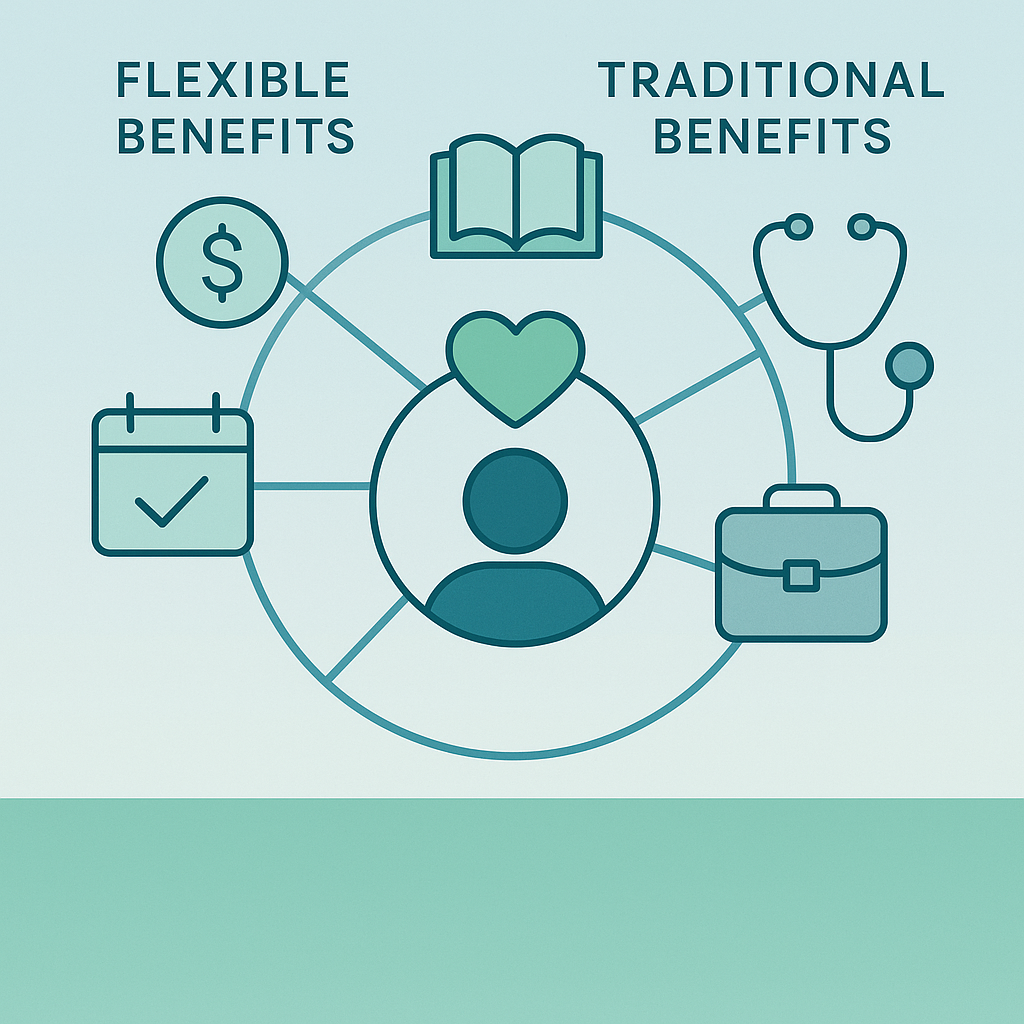
Traditional group insurance bundles coverage into fixed categories, typically medical, dental, and vision, with little room for individual adjustment. Employees who do not need orthodontic coverage or prescription drug benefits still pay into those pools through employer premiums. Flexible benefits flip this model by giving each employee control over how their benefit dollars are spent. Here are the key differences:
Canadian employers building a flexible benefits program typically work with three main account types. A Health Spending Account (HSA) covers CRA-eligible medical expenses such as dental work, prescriptions, vision care, and paramedical services like physiotherapy and chiropractic treatments. Because HSA reimbursements are classified as non-taxable benefits by the CRA, they offer a significant tax advantage over equivalent salary increases or taxable allowances. A Wellness Spending Account (WSA) extends coverage beyond medical needs to include gym memberships, fitness equipment, mental health apps, professional development, and even home office ergonomics. WSAs are taxable benefits but offer unmatched flexibility in categories that employees consistently rank as high-priority. The distinction between FSA and HSA often confuses. In the Canadian context, true FSAs (as structured in the United States) do not exist in the same regulatory form. Canadian employers instead use HSAs and WSAs to achieve similar outcomes with distinct tax treatments and eligible expense categories.
Moving from a traditional benefits model to a flexible one requires planning, but the process is more straightforward than many employers expect. The key is choosing the right combination of accounts, setting clear policies, and selecting an employee benefits platform that handles administration without creating more work for your HR team. Whether you operate a 15-person startup in Ontario or a 500-person enterprise in British Columbia, the implementation framework follows the same core steps.
Start by auditing your current benefits spend and identifying where the gaps exist. Survey your employees to understand which categories they value most. Many employers discover that wellness spending accounts rank higher than expected, particularly among younger employees who prioritize mental health and fitness over traditional dental coverage.
Next, define your budget. With a flexible model, you set a fixed annual allowance per employee, often split between an HSA and a WSA. Common allocations range from $500 to $3,000 per year per employee, depending on company size, industry norms, and the province you operate in. Customizable benefits in Alberta may emphasize different categories than those popular among teams in Quebec, where wellness spending accounts have seen rapid adoption.
Once budgets and account types are determined, select a benefits administration platform that handles claims, reimbursements, reporting, and compliance. GoKlaim is one example of a Canadian platform built specifically for this purpose, offering employers a streamlined way to manage HSAs, WSAs, and rewards programs through a single dashboard. The platform allows employers to set department-level or individual allowances, define eligible expense categories, and give employees a mobile-first experience for submitting and tracking claims.
Canada's benefits landscape varies by province, and employers with teams across multiple regions need to account for these differences. In Ontario, health spending accounts must comply with CRA guidelines on eligible medical expenses, and small businesses often find HSAs to be a more cost-effective alternative to traditional insurance. British Columbia employers frequently pair HSAs with WSAs to attract talent in the competitive Vancouver tech market. Alberta-based companies often lean into customizable benefits that include professional development and home office allowances, reflecting the province's high proportion of remote workers.
Quebec presents unique considerations. Employers must ensure that HSA structures align with both federal CRA rules and provincial tax treatment. Wellness spending accounts are eligible under flexible benefit plans in Quebec, but taxable benefit reporting must be handled correctly to avoid compliance issues. Regardless of province, working with a platform that automates compliance tracking significantly reduces administrative burden.
Flexible benefits in Canada give employers a practical, cost-effective way to meet the diverse needs of a modern workforce without the rigidity and escalating costs of traditional group insurance. By combining Health Spending Accounts, Wellness Spending Accounts, and clear employee communication, organizations of any size can build a benefits program that drives retention, engagement, and satisfaction. The shift toward customizable employee benefits is not a passing trend. It is how competitive Canadian employers will attract top talent in the years ahead. Platforms like GoKlaim make the transition manageable by consolidating administration, claims, and reporting into a single system designed for Canadian employers navigating flexible benefits for the first time or refining an existing program.
Ready to build a flexible benefit plan that works for your team? Explore GoKlaim's platform and see how easy benefits administration can be.
A flexible benefit plan is an employer-sponsored program that allocates a set annual allowance to each employee, who then chooses how to spend it across eligible health, wellness, and lifestyle categories rather than receiving a fixed insurance package.
Employers fund Health Spending Accounts or Wellness Spending Accounts with a defined dollar amount, and employees submit claims for eligible expenses through a benefits platform to receive tax-advantaged or taxable reimbursements depending on the account type.
Canada does not have a direct equivalent to the US-style Flexible Spending Account; instead, Canadian employers use Health Spending Accounts (non-taxable, CRA-regulated medical expenses) and Wellness Spending Accounts (taxable, broader lifestyle expenses) as flexible spending account alternatives.
Yes, flexible benefits are available and increasingly popular among Ontario small businesses because HSAs and WSAs offer predictable costs with fixed annual allowances, eliminating the unpredictable premium increases associated with traditional group insurance.
Employees can customize their benefits by directing their allocated allowance toward the specific expenses that matter most to them, choosing from employer-defined eligible categories within their HSA or WSA.