
A health savings account is a flexible, employer-funded benefit program that allows employees to allocate pre-approved funds toward health, wellness, and medical expenses not fully covered by traditional group insurance. Unlike rigid insurance plans with fixed coverage levels, an HSA gives employees the freedom to spend on the services and products that matter most to them, from dental and vision care to mental health counseling and chiropractic treatments. For Canadian employers, HSAs offer a cost-effective alternative or complement to conventional benefits, allowing businesses to control spending while delivering meaningful, personalized support to their teams.
Understanding what a health spending account is, how it works, and what expenses qualify is essential for HR professionals, business owners, and employees evaluating or transitioning to flexible benefits models. This guide breaks down the fundamentals of HSAs, explores eligible expenses, compares HSAs to other benefit structures, and explains why they have become a popular choice for modern, cost-conscious organizations across Canada.
Health spending accounts function as employer-funded reimbursement plans. Employers allocate a set dollar amount per employee, either annually or monthly, and employees submit claims for eligible expenses as they incur them. Once approved, employees receive reimbursement up to their allocated limit. This structure provides predictable costs for employers and spending flexibility for employees.
A health savings account is fundamentally different from group insurance. Traditional insurance plans operate on a premium basis, where employers pay fixed monthly costs regardless of whether employees use the coverage. Claims are processed by insurers, and coverage is limited to predefined categories with specific caps and exclusions. In contrast, an HSA is fully customizable. Employers decide which expense categories to include, set individual spending limits, and only pay for what employees actually claim. There are no premiums, no underwriting, and no carrier restrictions. Employees are not locked into a one-size-fits-all plan and can prioritize the services that align with their personal health needs.
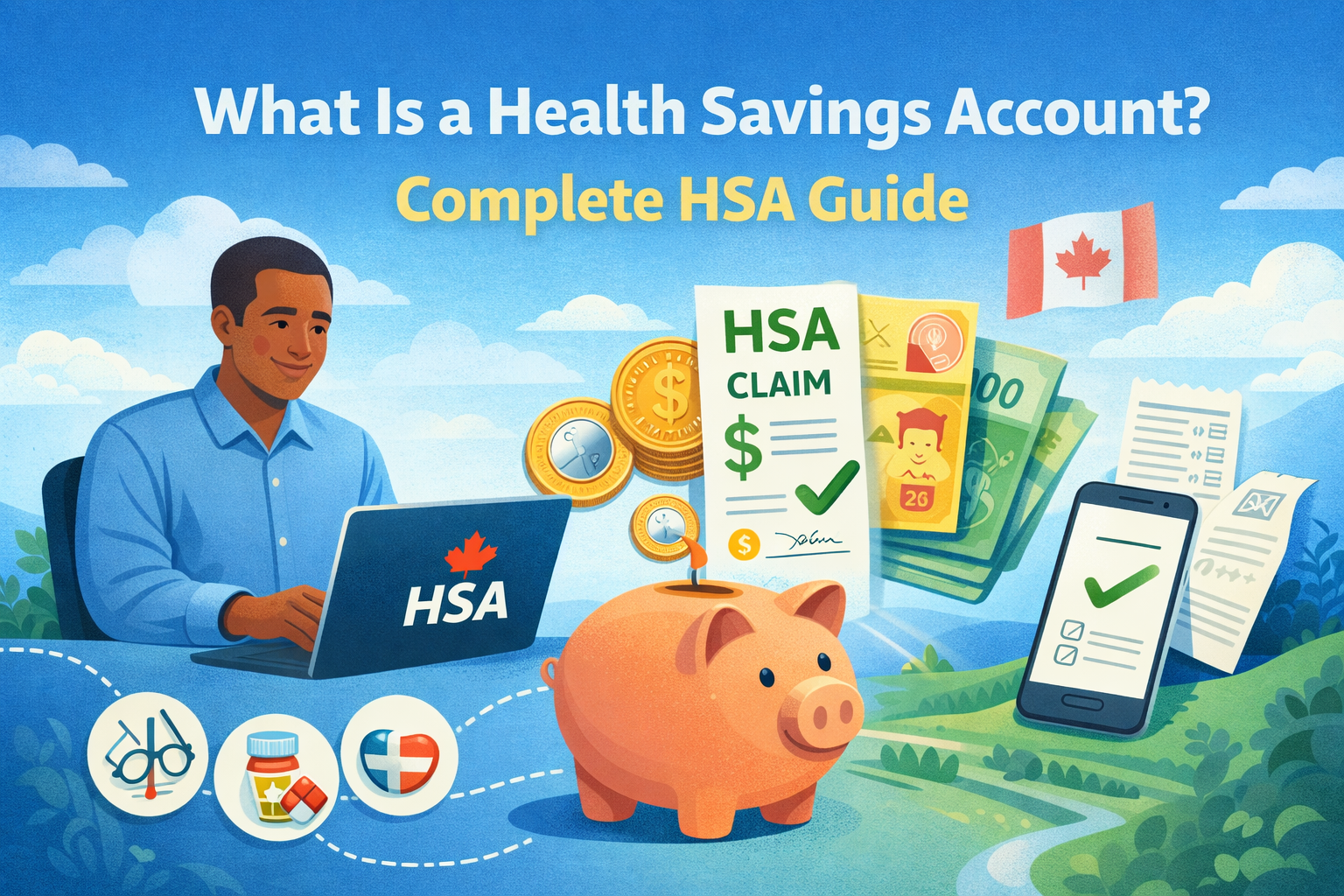
The process is straightforward. Employees incur an eligible health or wellness expense, such as a dental cleaning, prescription glasses, or therapy session. They then submit a claim through their employer's benefits platform, typically via a mobile app or web portal, along with a receipt or invoice. The employer or plan administrator reviews the claim to ensure it falls within the eligible categories and spending limit. Once approved, the employee receives reimbursement, usually within a few business days. This claim-and-reimburse model ensures transparency, reduces administrative burden, and gives employees direct control over their benefits spending.
Several features make health spending accounts appealing to both employers and employees:
One of the greatest advantages of a health spending account is the wide range of expenses employees can claim. Unlike traditional insurance, which often excludes or limits coverage for services like vision care, mental health, or alternative therapies, HSAs can be configured to support nearly any health or wellness need.
Eligible expenses vary based on how the employer structures the plan, but most HSAs in Canada cover the following categories. Employees submit receipts for services and products they have already paid for, and reimbursement is provided up to their allocated limit. Common categories include prescription medications, over-the-counter drugs, dental services such as cleanings and orthodontics, vision care including eye exams and prescription eyewear, mental health counseling and therapy sessions, physiotherapy and massage therapy, chiropractic care, and medical devices such as hearing aids or orthopedic supports. Some employers expand coverage to include wellness expenses like gym memberships, fitness equipment, nutritional supplements, and even alternative therapies such as acupuncture or naturopathy.
The Canada Revenue Agency provides guidelines on what qualifies as a medical expense for tax purposes, and most HSAs align with these definitions. However, employers have discretion to broaden or narrow eligible categories based on their benefits philosophy. For example, an employer focused on preventive health might include wellness coaching and fitness classes, while another prioritizing clinical care might limit coverage to medical and dental services only. Employees should always review their employer's specific plan document to understand which expenses qualify under their HSA.
Yes, mental health services are commonly covered under HSAs. This includes sessions with registered psychologists, licensed counselors, social workers, and psychiatrists. Many employers recognize the importance of mental health support and intentionally include it in their HSA offerings. Employees can submit claims for therapy sessions, mental health assessments, and even certain wellness programs focused on stress management or mindfulness training, provided the service is delivered by a qualified professional.
Health spending accounts are one of several flexible benefit options available to Canadian employers. Understanding how they compare to alternatives helps businesses choose the right model for their teams.
A Flexible Spending Account (FSA) is a US-based benefit structure where employees contribute pre-tax dollars to an account used for eligible medical expenses. In Canada, the equivalent is often referred to as a Health Care Spending Account (HCSA) or simply a health spending account. The key difference is that Canadian HSAs are typically employer-funded, not employee-funded. Employees do not contribute their own salary into the account. Instead, the employer allocates a set amount, and employees claim against it. Unlike US FSAs, which often have strict use-it-or-lose-it rules, many Canadian HSAs allow fund rollover, reducing waste and giving employees more flexibility.
Like any benefits model, HSAs come with advantages and limitations. On the positive side, they offer cost predictability for employers, since spending is capped at the allocated amount per employee. Employees gain flexibility to prioritize the services they need most, and the tax treatment is generally favorable for both parties. HSAs are also easy to administer, especially when managed through a digital platform, and they can be tailored to fit any budget or workforce demographic. However, HSAs are not insurance. They do not cover catastrophic health events or hospital stays, and employees must pay for services upfront before seeking reimbursement. For businesses with employees who have high ongoing medical needs, an HSA may need to complement rather than replace traditional group insurance.
The Canadian market offers several HSA providers, each with different features, pricing models, and service levels. When evaluating providers, employers should consider ease of use for both administrators and employees, flexibility in plan design, claim approval turnaround time, transparency in pricing, and the availability of mobile tools for on-the-go claim submission. GoKlaim is a leading provider in this space, offering a modern, intuitive platform that combines HSAs with wellness spending accounts and rewards programs, all managed through a single app. With flat-rate pricing, customizable categories, and robust analytics, GoKlaim helps businesses of all sizes deliver flexible, meaningful benefits without the complexity of traditional insurance.
Understanding the tax treatment of HSAs is essential for employers and employees alike. Properly structured health spending accounts offer significant tax advantages, but compliance with CRA guidelines is critical.
For employers, HSA contributions are generally tax-deductible as a business expense, similar to salaries and wages. This makes them a cost-effective way to enhance employee compensation without increasing payroll taxes. For employees, reimbursements received from an HSA are typically non-taxable, provided the expenses qualify as medical expenses under CRA rules and the plan is structured correctly. This means employees can access health and wellness services without paying income tax on the reimbursement, effectively increasing the value of their benefits package.
While HSAs function similarly across Canada, provincial regulations and tax rules can introduce nuances. In Quebec, for example, employers must ensure compliance with provincial payroll and benefits reporting requirements. Employers offering HSAs in Quebec should work with a knowledgeable provider or benefits consultant to ensure their plan meets both federal and provincial standards. Similarly, regulations in Ontario, British Columbia, and other provinces may affect how HSAs are administered, particularly for businesses with employees in multiple locations.
Yes, most HSAs allow employees to submit claims for eligible expenses incurred by their spouse and dependent children. This makes HSAs a family-friendly benefit that extends coverage beyond the individual employee. Employers can set rules around who qualifies as a dependent, typically following CRA definitions, which include children under a certain age or children with disabilities who rely on the employee for support. This feature is particularly valuable for employees with families, as it ensures comprehensive health coverage without the need for separate dependent plans.
For employers considering an HSA, implementation is straightforward but requires thoughtful planning to ensure the plan aligns with business goals and employee needs.
Start by defining your benefits budget and deciding how much to allocate per employee annually or monthly. Next, determine which expense categories to include based on workforce demographics and feedback. Choose a provider that offers the features, support, and pricing structure that fit your organization. Once the plan is designed, communicate clearly with employees about how the HSA works, what expenses are covered, and how to submit claims. Provide training or resources to ensure employees understand the process and feel confident using the benefit. Finally, monitor usage and gather feedback to refine the plan over time.
Whether unused HSA funds carry over to the next year depends on the employer's plan design. Many employers choose to allow rollover, which gives employees more time to use their allocated funds and reduces the pressure to spend unnecessarily at year-end. Rollover provisions also increase employee satisfaction by demonstrating that the benefit is truly intended to support their health over the long term, not just within a rigid annual cycle. Employers can set caps on how much can roll over or allow full carryover, depending on their budgeting preferences.
A health savings account is a flexible, cost-effective employee benefit that empowers workers to access the health and wellness services they need most while giving employers predictable, controllable spending. By offering broad coverage for medical, dental, vision, mental health, and wellness expenses, HSAs address the limitations of traditional insurance and adapt to the diverse needs of modern workforces. Understanding how HSAs work, what expenses qualify, and how they compare to other benefit models is essential for making informed decisions that benefit both businesses and employees. For organizations seeking a benefits solution that combines flexibility, transparency, and meaningful impact, an HSA is a powerful tool worth serious consideration.
Ready to modernize your employee benefits? Discover how GoKlaim can help you launch a customizable, easy-to-manage health spending account that your team will actually use and appreciate.
A health savings account is an employer-funded benefit that allows employees to submit claims for eligible health and wellness expenses, receiving reimbursement up to a pre-set annual limit.
Employees pay for eligible expenses out of pocket, submit receipts through a benefits platform, and receive tax-free reimbursement once claims are approved by the employer or administrator.
Common uses include dental care, prescription eyewear, mental health services, chiropractic treatments, physiotherapy, massage therapy, prescription medications, and wellness expenses like gym memberships.
Eligible expenses typically align with CRA medical expense definitions and can include medical, dental, vision, mental health, paramedical services, and wellness categories as determined by the employer.
Many employers design their HSA plans to allow unused funds to carry over to the following year, though this is determined by individual plan rules.
Yes, employer contributions to an HSA are generally tax-deductible as a business expense, and employee reimbursements are typically non-taxable when structured correctly.
In Canada, a health spending account is an employer-funded reimbursement plan that allows employees to claim eligible health and wellness expenses without the premiums or restrictions of traditional group insurance.
Yes, most HSA plans allow employees to submit claims for eligible expenses incurred by their spouse and dependent children, extending coverage to the entire family.
Health spending accounts function similarly across all Canadian provinces, though employers must ensure compliance with provincial tax and benefits regulations specific to Quebec, Ontario, or other jurisdictions.
Yes, chiropractic services are commonly included as an eligible expense under most HSA plans, provided the treatments are performed by a licensed chiropractor.