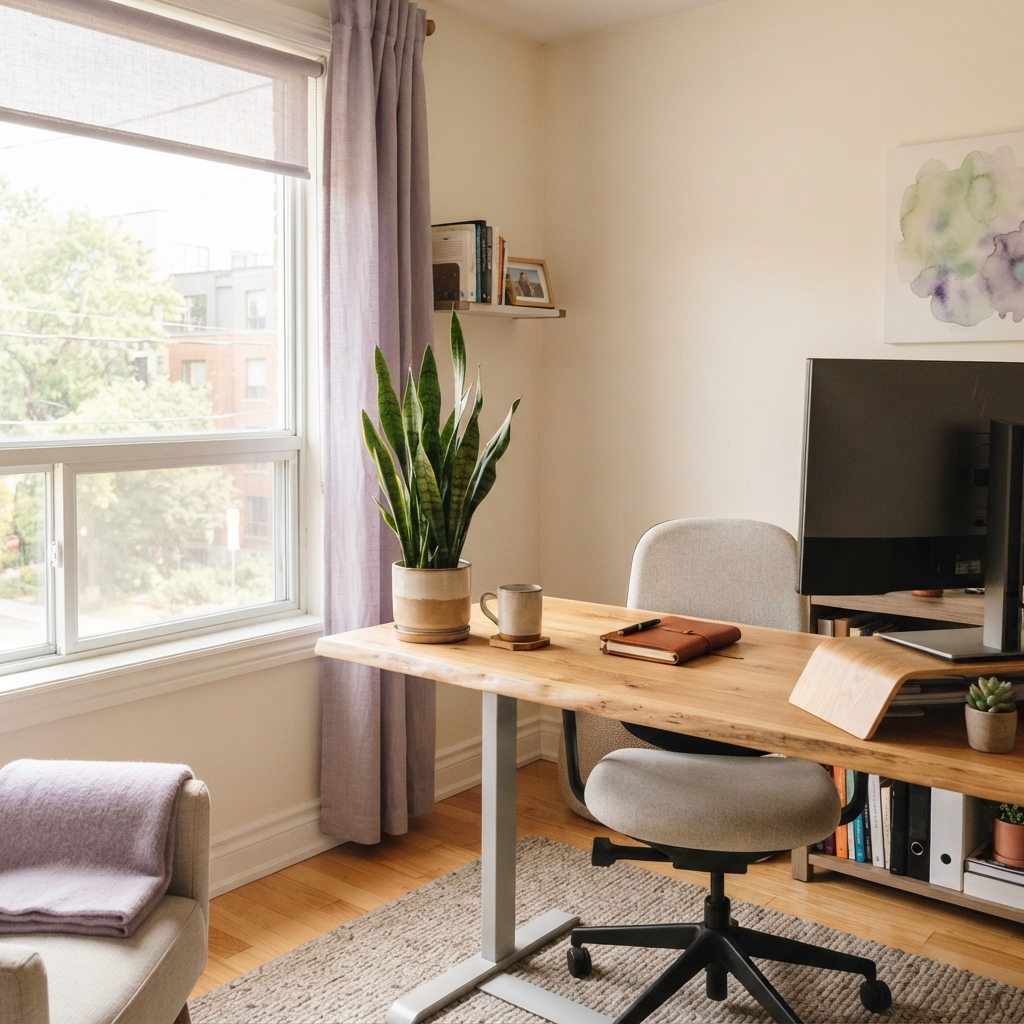

In Canada, a Wellness Spending Account (WSA) is the account type that typically covers home office equipment like ergonomic chairs, monitors, and standing desks, because employers can customize its eligible categories. A Health Spending Account (HSA) generally does not cover office furniture, since it is restricted to CRA-approved medical expenses unless a specific item is prescribed for a diagnosed condition.
Hybrid work is no longer an experiment in 2026; it is the operating model for a large share of Canadian small and mid-sized employers. That reality has pushed home office equipment out of the "nice to have" category and into the same conversation as ergonomic health, mental focus, and productivity. But when HR teams try to reimburse a $600 chair or a second monitor through their existing benefits, they often hit a wall, because the account type they chose was never designed to pay for furniture. The confusion usually is not about intent; it is about which spending account structure the employer set up in the first place.
Key Takeaways:
A Wellness Spending Account is the flexible account that can cover home office equipment, while a Health Spending Account is limited to CRA-eligible medical expenses.
WSA reimbursements for office furniture are taxable to the employee, but they remain a deductible business expense for the employer.
Clear category design, receipt requirements, and a customizable platform are what keep home office reimbursements compliant and easy to administer.
Before you can decide whether home office gear belongs in your benefits plan, you need to understand the two account structures Canadian employers rely on. They look similar on the surface but follow very different rules under the Income Tax Act.
A Health Spending Account is a CRA-recognized Private Health Services Plan, which means every reimbursement must line up with the list of eligible medical expenses in the tax code. Employees pay for a qualifying expense, submit a receipt, and get reimbursed tax-free, while the employer deducts the cost as a business expense.
Medical and dental care: Prescription drugs, dental cleanings, orthodontics, and vision care are the core categories.
Paramedical services: Physiotherapy, chiropractic, massage therapy, and registered psychology sessions typically qualify.
Prescribed equipment: An ergonomic chair or standing desk may only qualify if a physician prescribes it to treat a specific condition, and the paperwork must support that.
Dependents: Spouses and eligible children can usually claim under the same HSA balance.
A Wellness Spending Account is a taxable benefit, and that is precisely what gives it flexibility. Because it sits outside the CRA's medical-expense list, employers can define almost any category that supports employee wellbeing, from gym memberships to professional development to home office setup. For a deeper side-by-side view of how the two accounts differ in eligibility, tax treatment, and administration, this HSA vs WSA comparison walks through it in detail. The trade-off is simple: HSA reimbursements are tax-free but restricted, while WSA reimbursements are taxable but customizable.
Home office equipment sits almost entirely on the WSA side of the ledger, and the reason comes down to how the CRA classifies these purchases. A monitor or a desk is not a medical expense unless it is treating a diagnosed condition, so it cannot flow through an HSA by default. But it clearly supports wellness, focus, and long-term musculoskeletal health, which is exactly the kind of outcome a WSA is built to fund.
Employers building a home office category usually include a mix of ergonomic essentials and productivity tools. The list of WSA-eligible expenses gives a fuller picture, but for home office specifically, most plans cover ergonomic chairs, sit-stand desks, external monitors, keyboards and mice, monitor arms, laptop risers, task lighting, noise-cancelling headphones, and webcams. Some employers also include a portion of home internet or a one-time setup stipend, framing it as a remote work wellness allowance for employees rather than a general expense reimbursement.
The important design choice is whether to cap the category, cap the item, or cap both. A $1,000 annual cap on the home office category with a $500 per-item limit tends to work well, because it prevents a single purchase from consuming the entire wellness balance while still letting employees invest in something substantial like a proper chair.
There is a narrow lane where an HSA-eligible expenses list can include something that looks like office equipment. If an employee has a documented back condition and a physician prescribes a specific ergonomic chair as treatment, the chair may qualify as a medical expense. The same logic can apply to specialized keyboards for repetitive strain injuries or standing desks prescribed for circulation issues. In every case, the trigger is a written prescription tied to a diagnosis, not a general preference for better posture.
The tax treatment of home office reimbursements is the part that trips up most employers, and it is worth getting right from the start. Canadian tax authorities have been clear that most employer-provided home office stipends are taxable to the employee unless they fall under a specific temporary allowance or reimburse a documented business expense. A helpful guide to HSAs in Canada walks through how the CRA distinguishes tax-free medical reimbursements from taxable wellness perks, and the same logic applies here.
When an employee submits a claim for a $700 ergonomic chair through a WSA, the reimbursement is added to their T4 as a taxable benefit for the year. The employee pays income tax on that amount, but the employer still deducts the full $700 as a business expense. Understanding taxable benefits in Canada is essential before you communicate the plan, because employees who expect a tax-free reimbursement will be surprised at year-end otherwise. A good rule of thumb from published tax implications for employers is to communicate the taxable nature of the WSA on day one, not at the point of claim.
Building a compliant home office reimbursement category is more straightforward than most employers expect. The heavier lift is deciding the rules, not implementing them. If you are new to this, setting up a wellness account is a good starting point for the full workflow.
Define the category clearly: Spell out what qualifies (chairs, monitors, desks, lighting) and what does not (decor, personal electronics, subscriptions).
Set allowance limits: Choose an annual cap per employee and, if useful, an item-level cap to prevent single large purchases from draining the balance.
Require itemized receipts: Employees should submit receipts showing the vendor, item, date, and amount, which supports both audit trails and expense analysis on HSA benefits and tax consequences reviews.
Document ownership rules: Decide whether the equipment belongs to the employee or the company, especially for higher-value items, and put it in writing.
Communicate the tax treatment: Confirm in writing that WSA reimbursements are taxable and will appear on the T4.
Platforms like GoKlaim let employers configure all of this from a single dashboard, which is a large part of why remote work benefits have become easier to administer across distributed teams. Reviewing the full list of WSA setup best practices before you launch will save time later when employees start asking edge-case questions.
Home office equipment sits in an odd corner of the benefits world, part productivity spend, part wellness investment, and it is a Wellness Spending Account that handles it best. The WSA gives employers the freedom to define categories that reflect how their teams actually work, while the HSA continues to do what it does well: reimburse medical expenses tax-free. Getting the account type right upfront, and communicating the tax treatment clearly, is what separates a home office benefit that employees love from one that generates payroll surprises. For Canadian employers building for a hybrid workforce, that clarity is worth the small amount of setup work it takes.
Ready to design a home office benefit that fits how your team actually works? Explore GoKlaim's flexible spending accounts to see how customizable categories, fast reimbursements, and transparent pricing come together in one platform.
Yes, if your employer has included home office equipment as an eligible category in your Wellness Spending Account, items like ergonomic chairs, monitors, and desks can typically be reimbursed.
WSA-eligible expenses are set by the employer and commonly include gym memberships, mental health services, professional development, ergonomic equipment, and home office setup costs.
Employees usually upload an itemized receipt through their benefits platform's app or web portal, select the appropriate category, and receive reimbursement once the claim is approved.
Office furniture reimbursed through a WSA is a taxable benefit for the employee but remains a fully deductible business expense for the employer.
Rollover depends on how the employer configures the plan, and many WSA providers, including GoKlaim, allow unused funds to carry over to the following benefit year.
An HSA only covers home office items if they are prescribed as medical treatment, while a WSA can cover general home office equipment as a taxable wellness category.
Amanda Brooks is a Senior Content Writer specializing in employee benefits, HR technology, and workplace wellness. She translates complex benefits topics into practical, research-driven guidance for Canadian employers building modern, people-first workplaces.