
In 2025, employee benefits administration has become a complex, high-stakes discipline for HR teams. Evolving employee expectations, a competitive labor market, and rapid technological change have pushed benefits management into a strategic role. Many organizations still face outdated workflows, rising compliance demands, and communication gaps, prompting a move to modern benefits administration services that prioritize automation, accuracy, and a superior employee experience.
Benefits administration is the end-to-end management of an organization’s benefits package from plan design and enrollment to ongoing administration, compliance, claims handling, and continuous employee communication. Modern platforms automate repetitive tasks, improve data quality, and create a seamless experience for administrators and employees alike, helping organizations attract and retain talent while supporting workforce wellbeing and productivity.
Effective benefits administration goes beyond managing plans; it ensures that employees clearly understand and utilize the benefits available to them. With the help of digital platforms, HR teams can simplify enrollment, track participation, and generate valuable insights into employee preferences. This data-driven approach allows organizations to refine their offerings and align benefits strategies with workforce needs. Ultimately, streamlined benefits administration not only saves time and reduces errors but also strengthens employee satisfaction and trust in the company’s commitment to their well-being.
Streamlined administration protects budgets, elevates employee satisfaction, and reduces risk. Efficient processes prevent manual errors, keep enrollments and claims on track, and support an increasingly remote and multinational workforce. A thoughtful approach also enables tailored benefits for diverse demographics and leverages analytics for better decisions, all while reducing legal exposure as regulations and legislation tighten globally.
A streamlined employee benefits administration system is essential for building a modern, competitive organization. By automating workflows, integrating payroll and benefits data, and offering employees a simple self-service experience, companies can improve accuracy and efficiency across HR operations. These digital solutions help reduce administrative burden, ensure compliance with evolving regulations, and enhance transparency for employees. As a result, businesses gain stronger engagement, improved retention, and a clearer return on investment from their employee benefits programs.
Winning HR teams combine digital tools, clear communication, personalization, deep integrations, and analytics. The following priorities help transform benefits from a manual burden into a strategic advantage.
The era of paper forms and spreadsheets is over. Modern, cloud-first systems centralize data, simplify enrollment, automate eligibility checks, and offer real-time dashboards. Integrated tools connect with payroll, HRIS, and time systems to eliminate re-entry and fortify compliance. Automation via benefits administration automation accelerates enrollments, life-event changes, and claims while freeing HR for higher-impact work.
Employees often miss value due to unclear or infrequent messaging. Provide welcome kits with clear summaries, year-round updates (email, webinars, in-app notifications), and an always-available portal for FAQs and contacts. Proactive, consistent communication empowers informed choices and improves program ROI.
Today’s workforce is multigenerational, multicultural, and often hybrid or remote. Personalization and flexible choice, supported by intuitive tools and self-service, help employees select what they value most. A model anchored in flexible benefits administration can include tiered health plans, voluntary benefits, lifestyle accounts, and mental health support—continuously refined through surveys and utilization analytics.
Unified benefits, payroll, and HR data reduces errors and delays. Key integrations enable synchronized records, automated rule enforcement, and secure single sign-on. A robust benefits administration platform combines automation, analytics, and compliance features suitable for global and remote teams.
Analytics reveal enrollment trends, utilization patterns, and cost-to-participation ratios. Insights highlight underused offerings, guide resource allocation, and anticipate needs turning benefits into an adaptable, cost-effective advantage for the organization and its people.
When selecting benefits administration software, it is important to focus on features that enhance efficiency, accuracy, and overall user experience. The best platforms simplify complex HR workflows while ensuring compliance with regional and international regulations.
A user-friendly interface allows employees to easily access, review, and update their benefits information anytime and anywhere. This accessibility empowers employees to manage their own benefits, reducing HR workload and improving satisfaction.
Automation eliminates manual paperwork and errors during enrollment periods. Employees receive timely reminders, can review available plans, and make selections with ease, while HR teams ensure eligibility and compliance are automatically tracked.
Advanced analytics help HR teams gain deeper insights into benefits utilization, employee preferences, and program performance. With real-time reporting, organizations can make informed decisions, identify cost-saving opportunities, and adjust benefits strategies for better outcomes.
Integration ensures that all data flows smoothly between HR, payroll, and benefits platforms. This reduces duplication, minimizes errors, and allows organizations to maintain accurate employee records while simplifying overall benefits management.
As labor laws and tax rules evolve, compliance features help organizations stay up to date. Automated alerts and reporting functions ensure that every benefits process adheres to legal requirements, protecting the company from penalties and ensuring employees receive accurate coverage.
Together, these features create a streamlined, transparent, and scalable benefits administration system. They help HR professionals focus on strategy rather than paperwork while providing employees with a simple and engaging experience that promotes trust and participation.
Technology has transformed enrollment from paperwork to guided, digital experiences. With Automated benefits enrollment systematically removes manual steps by opening time-bound windows, sending reminders, validating eligibility in real time, and supporting secure document uploads. Decision-support tools clarify coverage options and costs, while dashboards give HR instant visibility into progress.
Automating benefits enrollment in 2025 not only simplifies administrative tasks but also enhances employee engagement throughout the process. With digital platforms, employees can explore, compare, and select plans through interactive portals that explain each option in clear, easy-to-understand terms. Personalized recommendations based on life stages, family needs, or past selections help employees make informed decisions without confusion. This modern approach eliminates delays, reduces paperwork, and ensures that every enrollment is accurate and compliant.
For HR teams, automation delivers real-time tracking, built-in analytics, and seamless integration with payroll and compliance systems. This provides greater control over deadlines, helps identify potential errors before they occur, and enables a smoother enrollment experience for the entire organization. By adopting automated solutions, companies can save time, improve accuracy, and deliver a more transparent and user-friendly benefits enrollment process that aligns with the expectations of today’s digital-first workforce.
Organizations still face hurdles: evolving laws, manual processes, fragmented systems, and low engagement. Staying current on top compliance and policy issues, adopting automation, consolidating systems, and investing in benefits education are proven remedies. Look for platforms with continuous compliance updates, e-signatures, audit-ready documentation, and transparent claims tracking.
Overcoming these challenges requires a strategic combination of technology, communication, and employee engagement. By centralizing all benefits processes within a single digital platform, organizations can reduce errors, ensure compliance, and create a more transparent experience for both HR and employees. Regular training sessions and clear communication about available benefits can significantly boost participation and satisfaction. Additionally, leveraging data insights allows HR leaders to identify trends, improve plan design, and make more informed decisions. When supported by automation and real-time monitoring, benefits administration becomes not only more efficient but also a key driver of workforce well-being and retention.
Global employers must navigate varied labor laws, cultural expectations, and market norms. Leading platforms support country-specific plan designs, multiple currencies and languages, and regional compliance. Central dashboards provide global oversight with local drill-downs, helping teams manage benefits administration compliance by country across the USA, Europe, and Asia Pacific.
Managing multinational benefits administration effectively requires a balance between global consistency and local customization. Employers must ensure that benefit offerings align with regional laws and cultural preferences while maintaining a unified corporate strategy. Advanced digital platforms simplify this by offering localized plan options, real-time compliance tracking, and centralized data management. This approach not only reduces administrative complexity but also ensures employees across different regions receive fair, relevant, and compliant benefits. As a result, global organizations can strengthen their employer brand, improve engagement, and foster a more connected international workforce.
Cloud platforms dominate due to flexibility, rapid deployment, ongoing updates, strong security, and remote access, ideal for hybrid, global work. They scale cost-effectively and adapt quickly to regulatory change, while on-premise systems often require heavy IT overhead and slower updates.
Modernizing benefits administration yields measurable gains for both HR efficiency and employee experience.
Automation replaces repetitive manual processes, such as data entry, paper-based enrollment, and claims management. By using digital tools, HR teams can save valuable time and reduce the likelihood of human error. This efficiency leads to lower administrative costs and allows HR professionals to focus more on strategy and employee support rather than paperwork.
With labor laws and regulations constantly evolving, maintaining compliance can be challenging. Streamlined benefits administration software provides automatic updates, audit-ready documentation, and detailed reporting tools that help companies stay compliant across multiple regions. This minimizes the risk of penalties, errors, or missed deadlines.
A smooth and transparent benefits experience encourages employees to explore and use the benefits available to them. When employees understand their options and can access them easily through self-service portals, their satisfaction and trust in the organization increase. This positive experience directly influences morale, loyalty, and retention.
Advanced analytics within modern benefits platforms provide HR leaders with real-time insights into participation rates, claim trends, and cost patterns. These insights help refine plan designs, optimize spending, and align benefits strategies with workforce needs. Data-driven decision-making ensures that the organization continues to provide relevant and effective benefits.
Today’s diverse workforce values choice and customization. Streamlined systems allow employers to tailor benefits offerings based on employee demographics, preferences, and life stages. Whether through flexible spending accounts, mental health programs, or wellness incentives, personalization makes employees feel valued and supported.
Together, these benefits create a continuous cycle of improvement, where greater efficiency, stronger compliance, and higher engagement reinforce one another. Over time, organizations that invest in modern benefits administration achieve higher retention, better employee well-being, and a stronger competitive advantage.
While the core principles of benefits administration remain universal accuracy, compliance, and employee satisfaction, the implementation differs significantly by region.
Benefits platforms in the US must integrate directly with insurance carriers and manage complex compliance processes like ACA (Affordable Care Act) reporting and COBRA administration. The inclusion of tax-advantaged accounts such as HSAs and FSAs is also essential, along with automation to ensure seamless payroll deductions and benefit elections.
Canadian systems must accommodate provincial healthcare regulations and bilingual requirements in English and French. Platforms often focus on flexible benefits, digital claims management, and ensuring compliance with both federal and provincial labor laws. Seamless integration with payroll and CRA (Canada Revenue Agency) standards is also a priority.
In these regions, GDPR compliance governs how employee data is stored and processed. Systems must support multiple national healthcare and pension schemes while maintaining high standards of data protection. Flexible work policies and localized benefit structures, such as childcare vouchers or cycle-to-work programs, add additional layers of complexity.
Here, benefits administration often centers on superannuation contributions, private health coverage, and region-specific compliance requirements. Platforms must also handle diverse labor laws and cultural differences across countries, offering flexible benefit options that align with local market expectations.
Modern multinational companies are turning to unified platforms that centralize data, automate compliance, and localize employee experiences. These systems bridge regional gaps, ensuring consistency in reporting, efficiency in administration, and fairness in benefit delivery across all locations.
While benefits administration and payroll serve different core functions, they operate most effectively when fully integrated. Benefits administration focuses on managing employee health plans, retirement savings, and wellness programs, while payroll handles salary processing, deductions, and tax compliance. When these systems work together, HR teams gain a unified view of employee data that enhances accuracy and efficiency across all workforce management processes.
Real-time integration between benefits and payroll ensures that any updates to employee information, such as new enrollments, life events, or policy changes, automatically reflect in payroll deductions. This eliminates the need for manual data entry and reduces the risk of discrepancies in employee pay or benefit contributions. Additionally, automated synchronization supports compliance with regional labor laws and tax regulations by maintaining consistent and transparent records.
For employees, this integration translates into a smoother experience, as contributions, reimbursements, and benefit adjustments are processed accurately and on time. For employers, it means greater administrative control, reduced operational costs, and improved financial reporting. In 2025, organizations that align payroll and benefits administration systems through digital platforms like GoKlaim can expect higher efficiency, better accuracy, and a stronger overall employee experience.
Measuring the effectiveness of benefits administration is crucial for understanding both employee engagement and organizational efficiency. The right metrics help HR teams make data-driven decisions, optimize costs, and improve the overall benefits experience for employees.
Tracking how many employees enroll in each benefit plan helps identify which offerings are most valued. Low participation rates may suggest communication gaps, lack of awareness, or benefits that do not align with employee needs.
Analyzing the number, type, and frequency of claims provides insight into employee health and financial wellness patterns. Monitoring claim cycle times also highlights how efficiently your platform processes requests and resolves issues.
Regular surveys and satisfaction scores help evaluate whether employees feel supported by their benefits. This metric connects directly to retention and productivity since employees who value their benefits are more likely to stay engaged.
Calculating the cost per employee for benefits administration reveals the overall financial efficiency of your program. Comparing this cost to measurable outcomes, such as improved retention or reduced absenteeism, helps determine ROI and justify future investments.
Tracking compliance-related issues and how quickly they are resolved ensures your organization stays aligned with local and international regulations. Reducing errors in reporting or documentation can significantly lower legal and financial risks.
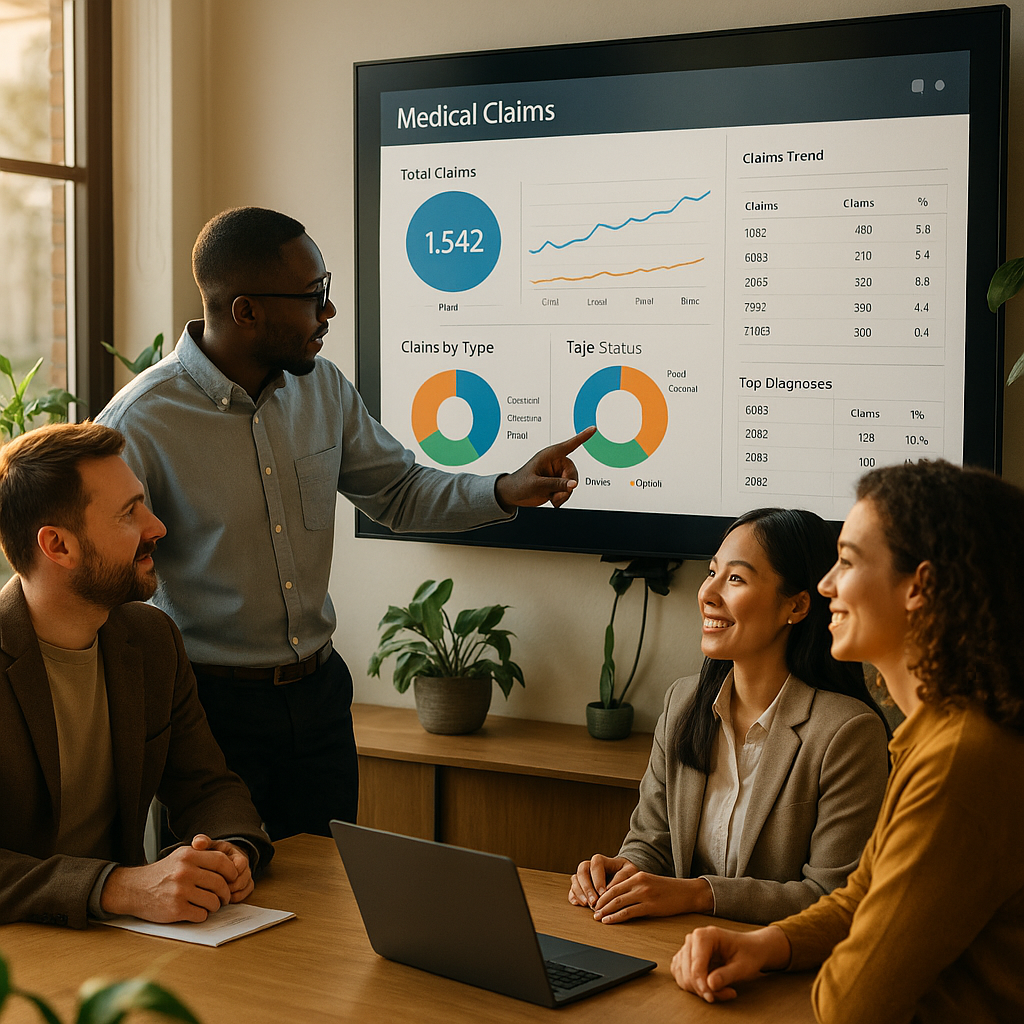
Modern benefits administration software provides real-time dashboards that consolidate these metrics into actionable insights. HR teams can visualize trends, forecast future costs, and make evidence-based adjustments that improve decision-making.
In 2025, the most successful benefits administrators will be those who use analytics not just for reporting, but for continuous improvement. By consistently tracking and analyzing these key performance indicators, organizations can enhance compliance, streamline workflows, and strengthen employee trust in their benefits programs.
As global employment regulations continue to evolve, ensuring compliance has become one of the most critical responsibilities for HR and benefits administrators. The complexity of managing local, provincial, and international laws makes manual tracking nearly impossible, especially for organizations with distributed or remote teams.
Modern benefits administration platforms simplify compliance by automating rule checks for eligibility, contributions, and deductions based on employee data. They automatically update when regulations change, ensuring that payroll deductions, benefits limits, and reporting requirements always stay current. Built-in e-signature capabilities and digital audit trails document every transaction and approval, creating a transparent record that can easily be referenced during internal reviews or external audits.
Strong data security and privacy controls are equally important. As data protection laws such as PIPEDA in Canada and GDPR in Europe continue to expand, organizations must ensure that sensitive employee information is stored securely and shared only with authorized entities. Cloud-based benefits software with advanced encryption and access management tools helps maintain compliance while enhancing trust.
In addition, real-time alerts and compliance dashboards allow HR professionals to stay ahead of potential issues before they escalate. Automated reporting simplifies submissions to government agencies and carriers, reducing administrative pressure and minimizing the risk of fines or penalties.
By combining automation, documentation, and proactive monitoring, organizations can maintain compliance effortlessly while focusing on strategic HR priorities. In 2025, compliance success will rely on having the right technology partner that continuously adapts to changing laws and keeps every process aligned with evolving standards.
Employee satisfaction with benefits has become a key factor in long-term retention and overall workplace engagement. In 2025, employees expect more than just traditional coverage; they look for holistic, transparent, and flexible experiences that align with their personal and family needs. Modern organizations are shifting toward personalized benefits strategies that empower employees to make informed choices about their well-being and financial security.
To improve satisfaction, companies should focus on ongoing communication rather than limiting benefits discussions to open enrollment periods. Year-round updates, educational webinars, and digital resource hubs help employees better understand their options and maximize the value of their plans. Platforms that offer intuitive self-service tools enable staff to view balances, manage claims, and update information independently, creating a sense of control and trust.
Integrating wellness programs is another proven way to boost engagement. By offering initiatives such as fitness reimbursements, mental health resources, and nutrition guidance, employers can address the physical, emotional, and social dimensions of health. Pairing these with a health spending account allows employees to cover eligible out-of-pocket medical costs, improving accessibility and financial peace of mind.
Finally, continuous feedback loops are essential. Regular surveys and open communication channels help HR teams understand changing employee preferences and make timely adjustments to benefits packages. By actively listening and evolving programs based on data-driven insights, organizations can build loyalty, improve retention, and strengthen their employer brand in a competitive job market.
AI is reshaping benefits with personalized recommendations, predictive analytics, and 24/7 chatbots that resolve routine questions. Modern, cloud-first systems such as AI-powered benefits administration platforms automate heavy lifting while surfacing cost-saving opportunities for employers and employees.
AI and automation are also redefining how HR teams manage benefits data and compliance. Predictive analytics can forecast employee needs, helping organizations design more relevant and cost-effective plans. Intelligent automation ensures that eligibility checks, reimbursements, and documentation are completed accurately and on time, reducing administrative errors and improving transparency. As organizations continue to adopt AI-powered benefits administration platforms, they gain a competitive edge through improved efficiency, stronger compliance management, and enhanced employee satisfaction. This technological shift not only saves time but also empowers HR leaders to focus on strategy and people, rather than repetitive manual tasks.
Modernizing benefits administration is now mission-critical for organizations aiming to stay competitive in a rapidly changing workplace. The combination of automation, data-driven insights, and personalized employee engagement helps HR teams streamline complex processes, reduce administrative burden, and enhance workforce satisfaction. As global regulations evolve and employee expectations rise, companies that embrace innovative, technology-driven solutions are better equipped to attract and retain top talent while maintaining compliance and efficiency. A future-ready benefits strategy not only strengthens internal culture but also demonstrates genuine care for employees’ financial, physical, and emotional well-being.
Empower your HR team and employees with smarter, streamlined benefits solutions.
Explore how GoKlaim can help you modernize benefits administration and drive long-term organizational success.
Benefits administration is the process of designing, managing, and delivering employee benefits like health insurance and retirement plans so employees receive their entitlements accurately and on time.
Adopt integrated software, automate repetitive tasks, personalize options, and sustain clear, consistent communication across channels to simplify operations and improve outcomes.
It reduces errors and compliance risk, speeds delivery, elevates employee satisfaction, and strengthens your ability to attract and retain top talent.
They manage enrollments and life events, coordinate with carriers, address employee inquiries, ensure compliance, and leverage technology to oversee day-to-day operations.
Digital tools guide plan selection, perform eligibility checks, accept electronic documents, and issue real-time notifications to employees and HR throughout the enrollment window.
Software automates complex workflows, improves data accuracy, enhances self-service access, supports compliance, and provides analytics that guide strategic HR decisions.
Personalize benefits for diverse needs, communicate frequently and clearly, offer intuitive self-service access, and act on feedback to keep programs relevant.
Yes. A well-managed, clearly communicated benefits program builds trust and support, boosting satisfaction, morale, and long-term retention.
Use a platform with automated rule checks, regular legal updates, robust reporting for audits, and configuration to meet country- and region-specific requirements.
Analytics reveal utilization trends, identify underused plans, control costs, optimize offerings, and support continuous improvements through data-driven decisions.