
Traditional group insurance plans have dominated the Canadian employee benefits landscape for decades, but a fundamental shift is underway. Employers across provinces are discovering that one-size-fits-all packages no longer serve their diverse workforces effectively, nor do they align with modern expectations for personalization and choice. Flexible benefits address this gap by allowing companies to allocate spending budgets that employees can direct toward the health, wellness, and lifestyle expenses that matter most to them. Rather than paying for premiums on coverage employees may never use, organizations can provide targeted support through spending accounts and customizable categories that reflect real needs. Understanding how these systems operate in practice is essential for any HR leader or business owner evaluating whether this approach fits their team and their budget.
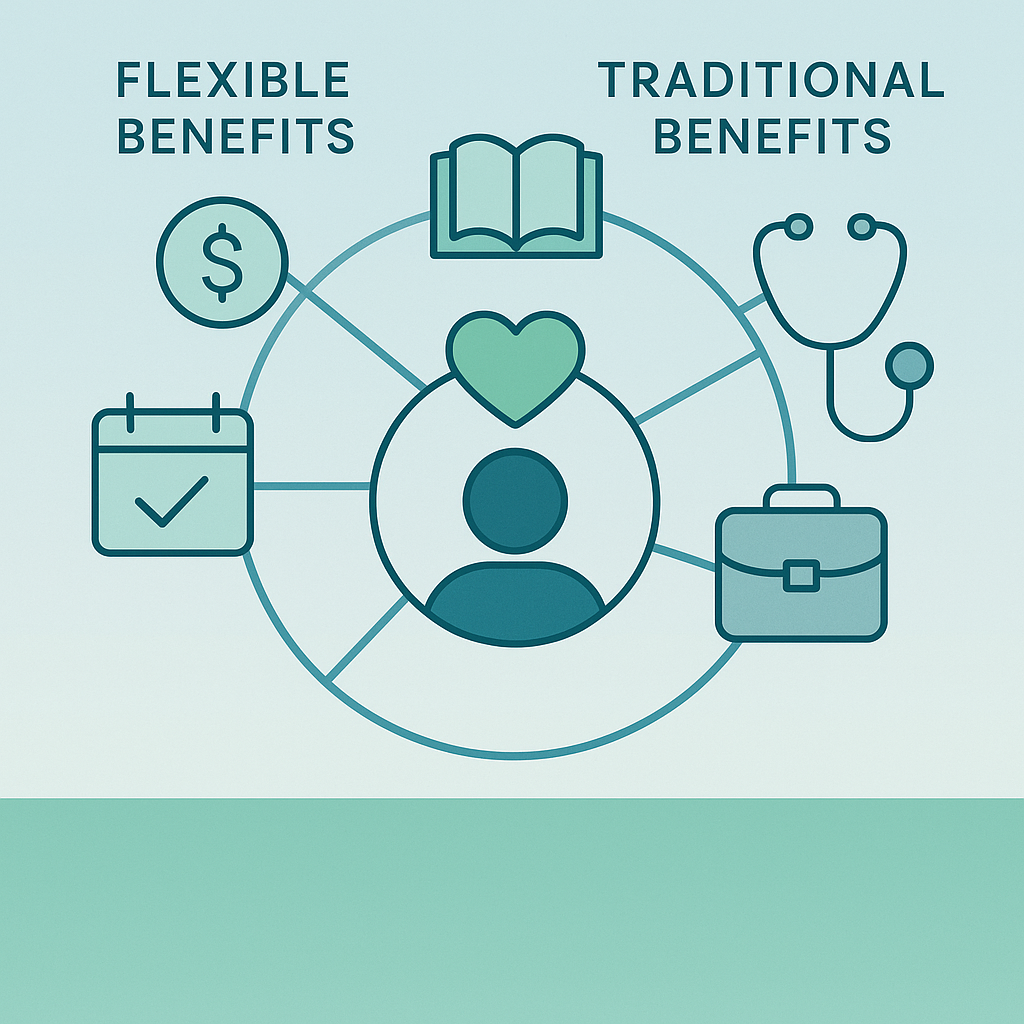
The core distinction between flexible health benefits and conventional group insurance lies in how value is delivered and controlled. Traditional plans bundle coverage into predetermined tiers with fixed premiums, deductibles, and co-pays. Employees receive the same package regardless of whether they need orthodontics, prescription drugs, or mental health counseling. The employer pays for breadth, not precision.
Flexible benefits flip this model by giving employers the ability to define spending categories and set individual or department-level allowances. Instead of purchasing a blanket policy from an insurer, companies allocate a fixed dollar amount per employee per year. That employee then decides how to spend it within approved categories such as paramedical services, vision care, fitness memberships, or even childcare support. The employer retains full budget control since spending cannot exceed the allocated amount. There are no surprise premium increases mid-year, no complex renewal negotiations, and no pressure to accept coverage changes dictated by an insurance carrier.
Employees appreciate the autonomy to direct their benefits dollars toward expenses they actually incur. A younger employee might prioritize mental health counseling and a gym membership, while a parent focuses on dental care for their children and orthodontics. This alignment between benefit availability and personal need drives higher utilization rates and greater satisfaction. Unlike group insurance, where premiums are paid whether or not claims are filed, flexible benefits systems ensure that every dollar allocated has the potential to deliver tangible value to the person receiving it.
Managing a flexible benefits program through a modern platform eliminates much of the administrative burden associated with traditional plans. Employees submit claims digitally, often through a mobile app, and approvals happen quickly based on predefined eligibility rules. Employers no longer need to liaise with insurance brokers for every policy question or coordinate complex claim adjudication processes. Reporting is transparent, and financial tracking is straightforward because spending is capped at the allocated amounts. This operational efficiency is especially valuable for small and mid-sized businesses that lack dedicated benefits administration teams.
A Health Spending Account is one of the most common structures within a flexible benefits framework. It operates as a notional account, meaning no actual funds sit in a dedicated account for each employee. Instead, the employer commits to reimbursing eligible medical expenses up to a specified annual limit. The HSA is governed by CRA regulations, which define what qualifies as an eligible medical expense and ensure tax treatment is correct.
The CRA maintains a comprehensive list of medical expenses that qualify for tax-free reimbursement through an HSA. This includes prescription drugs, dental care, vision services, physiotherapy, chiropractic treatment, psychologist fees, and many other paramedical and diagnostic services. Employers can also choose to cover expenses that fall outside the CRA list, but those amounts are considered taxable benefits and must be reported on the employee's T4. Platforms that manage HSAs typically build CRA compliance directly into their claim approval workflows, flagging non-eligible expenses automatically and ensuring proper tax reporting.
Employees incur an out-of-pocket expense, such as a dental cleaning or prescription refill, then submit a claim through the benefits platform. They upload a receipt or invoice showing the service provider, date, description, and amount paid. The platform validates the claim against the employee's remaining balance and the eligibility rules set by the employer. Approved claims are reimbursed either by direct deposit or through another payment method, often within a few business days. This process is faster and more transparent than traditional insurance claims, which often involve coordination of benefits, waiting periods, and unclear adjudication timelines.
HSA reimbursements are tax-deductible for the employer as a business expense and received tax-free by the employee when they cover CRA-eligible medical costs. This creates a more efficient exchange of value compared to simply increasing salaries, which would be subject to income tax and payroll deductions. For employers, this tax treatment makes HSAs a cost-effective way to enhance total compensation without inflating payroll costs. Employees benefit from receiving more net value per dollar the company spends on their benefits.
Beyond medical expenses, many Canadian employers are adopting Wellness Spending Accounts to support broader employee well-being. WSAs function similarly to HSAs but cover a different category of expenses focused on lifestyle, prevention, and personal development. These accounts reflect the reality that employee health and productivity are influenced by factors beyond traditional medical care.
Unlike HSA reimbursements, most WSA expenses are considered taxable benefits under CRA rules. This means the value of the reimbursement must be included in the employee's income and reported on their T4. Employers need to account for this in their budgeting and ensure their benefits platform handles the necessary tax reporting. Despite the taxable nature, WSAs remain attractive because they allow companies to support employee well-being in meaningful ways that group insurance cannot address, and employees still receive net value even after tax.
Implementing a flexible benefits system requires thoughtful planning around budget allocation, category design, and platform selection. The goal is to create a structure that is financially sustainable for the company while genuinely meeting employee needs.
Employers start by determining how much they can allocate per employee per year. This amount can be uniform across the organization or vary by role, seniority, department, or family status. For example, a company might allocate $1,500 annually to individual contributors and $2,500 to managers, or offer higher amounts to employees with dependents. The allocated budget is a hard cap, meaning the company's financial exposure is fixed and predictable. There are no surprise costs from high claims months or unexpected premium increases. This predictability is especially valuable for companies transitioning from traditional group insurance or operating with tight cash flow constraints.
Once the budget is set, employers choose which categories of expenses are eligible for reimbursement. This is where customization becomes powerful. A tech startup might prioritize professional development and home office equipment, while a manufacturing company might focus on fitness and preventive health. Employers can also set sub-limits within categories, such as capping fitness expenses at $500 per year or limiting professional development to $1,000. These rules are configured within the benefits platform and enforced automatically during the claim approval process. Clear communication of these rules to employees is essential so they understand what is covered and how to maximize their benefits.
The operational success of a flexible benefits program depends heavily on the technology that supports it. The platform must handle claim submissions, expense validation, payment processing, tax reporting, and employee communication with minimal manual intervention. Look for solutions that offer intuitive mobile apps so employees can submit claims on the go, transparent dashboards where they can track their balances in real time, and robust analytics for employers to monitor usage patterns. Integration with payroll systems is also critical for accurate tax reporting and efficient financial reconciliation. GoKlaim is one example of a platform built specifically for Canadian companies, offering HSAs, WSAs, and rewards programs through a unified interface designed to simplify both employee experience and employer administration.
A flexible benefits program is only as effective as the employees' willingness and ability to use it. User experience, communication, and ongoing support play a significant role in driving engagement and ensuring the program delivers its intended value.
When launching a flexible benefits program, employees need clear guidance on how the system works, what expenses are eligible, how to submit claims, and where to find their balances. Onboarding sessions, FAQ documents, and video tutorials help employees feel confident using the platform. Highlight real-world examples that resonate with your workforce, such as how a parent can use their HSA for their child's dental work or how a remote worker can claim their standing desk through a WSA. The more tangible the examples, the faster employees will begin engaging with their benefits.
Employees expect a frictionless experience when submitting claims. The best platforms allow users to snap a photo of a receipt, upload it directly from their phone, and receive approval within one to three business days. Automated validation rules reduce the need for manual review, and employees receive notifications at each stage of the process so they know exactly when to expect reimbursement. Fast turnaround times reinforce the value of the benefit and encourage continued use throughout the year.
Regularly collecting feedback from employees helps employers refine their flexible benefits offerings over time. Anonymous surveys, focus groups, and usage data analysis reveal which categories are most valued and which are underutilized. If employees consistently max out their fitness allowance but rarely claim professional development expenses, consider reallocating budget or expanding eligible fitness categories. This iterative approach ensures the program evolves alongside the workforce and maintains relevance as employee demographics and priorities shift.
Beyond the employee-facing experience, employers must consider the financial and operational logistics of managing a flexible benefits program. These factors determine whether the program is sustainable and scalable as the company grows.
One of the most compelling advantages of flexible benefits is the predictability of costs. Unlike group insurance, where premiums can increase significantly at renewal based on claims history or insurer pricing strategy, flexible benefits operate on a fixed allocation per employee. The company knows its total benefits expense in advance and can plan accordingly. There is no risk of mid-year premium hikes or surprise adjustments. This transparency makes it easier to forecast cash flow, manage budgets across departments, and communicate financial commitments to stakeholders.
When evaluating flexible benefits platforms, pay close attention to the fee structure. Some providers charge per-employee-per-month fees, while others take a percentage of claims processed. Hidden fees for account setup, customer support, or reporting can erode the cost advantage of moving away from traditional insurance. Look for platforms that offer flat-rate pricing with no surprises, so you can accurately calculate the total cost of the program and compare it directly to what you were paying for group insurance premiums and administrative overhead.
Flexible benefits programs must comply with CRA regulations, particularly around the tax treatment of HSA and WSA reimbursements. Platforms should automate tax reporting by flagging taxable benefits and generating the necessary documentation for year-end T4 reporting. Employers remain ultimately responsible for accurate tax filing, so ensure your platform provider offers clear audit trails, detailed transaction records, and support from knowledgeable staff who understand Canadian tax law. This reduces the risk of errors and simplifies interactions with accountants and auditors.
Many employers wonder whether flexible benefits can replace traditional group insurance entirely or if they should be used in combination. The answer depends on the size of the company, the health profile of the workforce, and the specific needs employees have.
Group insurance provides pooled risk coverage, meaning premiums are collected from all employees and used to pay claims for those who need medical care. The insurer assumes the financial risk and sets premiums based on the expected claims cost plus administrative fees and profit margin. An HSA, by contrast, is a defined contribution model where the employer sets a fixed spending limit per employee and reimburses actual expenses up to that limit. There is no insurance company, no pooled risk, and no claims adjudication by a third-party carrier. The employer controls the budget, and the employee controls how the money is spent.
Small businesses, startups, and companies with younger, healthier workforces often find flexible benefits for small businesses sufficient on their own. If employees do not have complex medical needs or dependents with high prescription drug costs, an HSA with a reasonable annual limit can cover routine care and preventive services without the overhead of insurance premiums. This approach is also appealing to companies that want to avoid the long-term commitment and renewal uncertainty that comes with group insurance contracts.
Larger companies or those with employees who have significant medical needs may choose to pair flexible benefits with a basic group insurance plan. In this model, the group plan covers high-cost items like hospitalization, major surgeries, and catastrophic events, while the HSA or WSA covers out-of-pocket expenses like co-pays, deductibles, and services not included in the insurance plan. This hybrid approach balances risk protection with flexibility and can be more cost-effective than purchasing comprehensive group insurance alone.
The shift toward flexible benefits is driven by both employer and employee expectations. Companies are looking for ways to control costs, differentiate their compensation packages, and retain top talent in competitive labor markets. Employees, especially younger generations, expect personalization, transparency, and benefits that align with their values and lifestyles.
Flexible benefits allow companies to offer meaningful support without the inflated costs of traditional insurance. By eliminating insurance company margins, administrative overhead, and coverage for services employees do not use, employers can deliver more net value per dollar spent. This efficiency is particularly important for small and mid-sized businesses operating on tight margins, where every dollar allocated to benefits must generate tangible employee satisfaction and retention.
Younger workers value flexibility and autonomy in their benefits. They want the ability to prioritize mental health counseling, fitness memberships, and professional development over traditional medical insurance they may rarely use. Older employees and those with families appreciate the ability to direct benefits toward dental care, vision services, and childcare support. Flexible benefits accommodate this diversity without forcing the employer to choose which demographic to prioritize. The result is a benefits program that feels relevant and fair to everyone on the team.
As remote work becomes permanent for many Canadian companies, traditional group insurance plans tied to geographic regions or provincial regulations become less practical. Flexible benefits platforms operate nationally and allow employees to claim expenses wherever they are located. Whether an employee is in Toronto, Montreal, Vancouver, or a rural community, they can access their benefits through the same app and submit claims for services in their local area. This geographic flexibility is a significant advantage for companies with distributed teams.
While flexible benefits offer many advantages, implementing them successfully requires addressing potential obstacles upfront. Anticipating these challenges and planning for them ensures a smoother rollout and higher employee adoption.
Transitioning from traditional group insurance to flexible benefits can feel risky if not managed carefully. Start by piloting the program with a small group or department to identify issues before rolling it out company-wide. Communicate the change well in advance, explaining why the shift is happening and what employees can expect. Provide side-by-side comparisons showing how the new system delivers equal or greater value than the old plan. Address concerns about losing coverage by emphasizing the control and choice employees gain. A phased approach reduces risk and builds confidence in the new model.
A common pitfall is launching the program and assuming employees will figure it out on their own. Without proactive communication and support, adoption rates can be low and the program may fail to deliver its intended value. Schedule live webinars or lunch-and-learn sessions where employees can ask questions and see the platform in action. Send regular reminders about unused balances, especially as the year-end approaches. Highlight success stories and testimonials from employees who have benefited from the program. The more visible and accessible the benefits are, the more employees will engage.
Tax treatment of flexible benefits can be confusing, especially when mixing HSA and WSA expenses. Work closely with your accountant or payroll provider to ensure taxable benefits are reported correctly and that employees understand the implications. Choose a benefits platform that automates as much of this process as possible and provides clear documentation for year-end reporting. If you are unsure about specific expense categories or CRA rules, consult a tax professional before finalizing your program design.
Flexible benefits represent a fundamental shift in how Canadian companies deliver value to their employees. By moving away from one-size-fits-all group insurance and toward customizable spending accounts, employers gain budget control, cost predictability, and the ability to offer personalized support that aligns with diverse employee needs. Employees benefit from autonomy, faster reimbursements, and benefits they actually use. Whether implemented as a standalone solution or paired with traditional coverage, flexible benefits provide a strategic, scalable approach to modern compensation. For HR leaders and business owners ready to modernize their benefits strategy, the transition is both practical and achievable with the right planning and technology.
Explore how GoKlaim can help your company implement flexible Health Spending Accounts, Wellness Spending Accounts, and employee recognition programs with transparent pricing and a user-friendly platform built for Canadian businesses.
Flexible benefits are employer-funded spending accounts that allow employees to choose how to allocate their benefits dollars across eligible health, wellness, and lifestyle expenses instead of receiving a fixed insurance plan.
Start by setting a per-employee budget, defining eligible expense categories, selecting a benefits platform, and communicating the program clearly to employees with onboarding sessions and ongoing support.
An HSA is a defined contribution model where employers reimburse eligible medical expenses up to a fixed limit, while group insurance pools risk and pays premiums to an insurer who covers claims based on policy terms.
Collect feedback through surveys, analyze usage data, and adjust eligible categories and spending limits to reflect the actual needs and priorities of your team over time.
Yes, HSAs are accessible to businesses of all sizes and often provide a more cost-effective and flexible alternative to traditional group insurance for smaller companies.
Flexible benefits offer greater personalization and cost control, while fixed benefits provide simplicity and pooled risk coverage; the best choice depends on workforce needs and budget constraints.
The best platform offers intuitive mobile access, automated claim validation, transparent pricing, CRA compliance, and robust reporting; evaluate providers based on these criteria and your specific needs.
HSAs in Quebec cover CRA-eligible medical expenses including prescription drugs, dental care, vision services, paramedical treatments, and diagnostic services, consistent with federal tax rules.
Flexible benefits platforms operate nationally, allowing remote employees to submit claims for services in their local area regardless of where the company is headquartered.
HSA reimbursements for CRA-eligible medical expenses are tax-free, while most WSA reimbursements are considered taxable benefits and must be reported on the employee's T4.