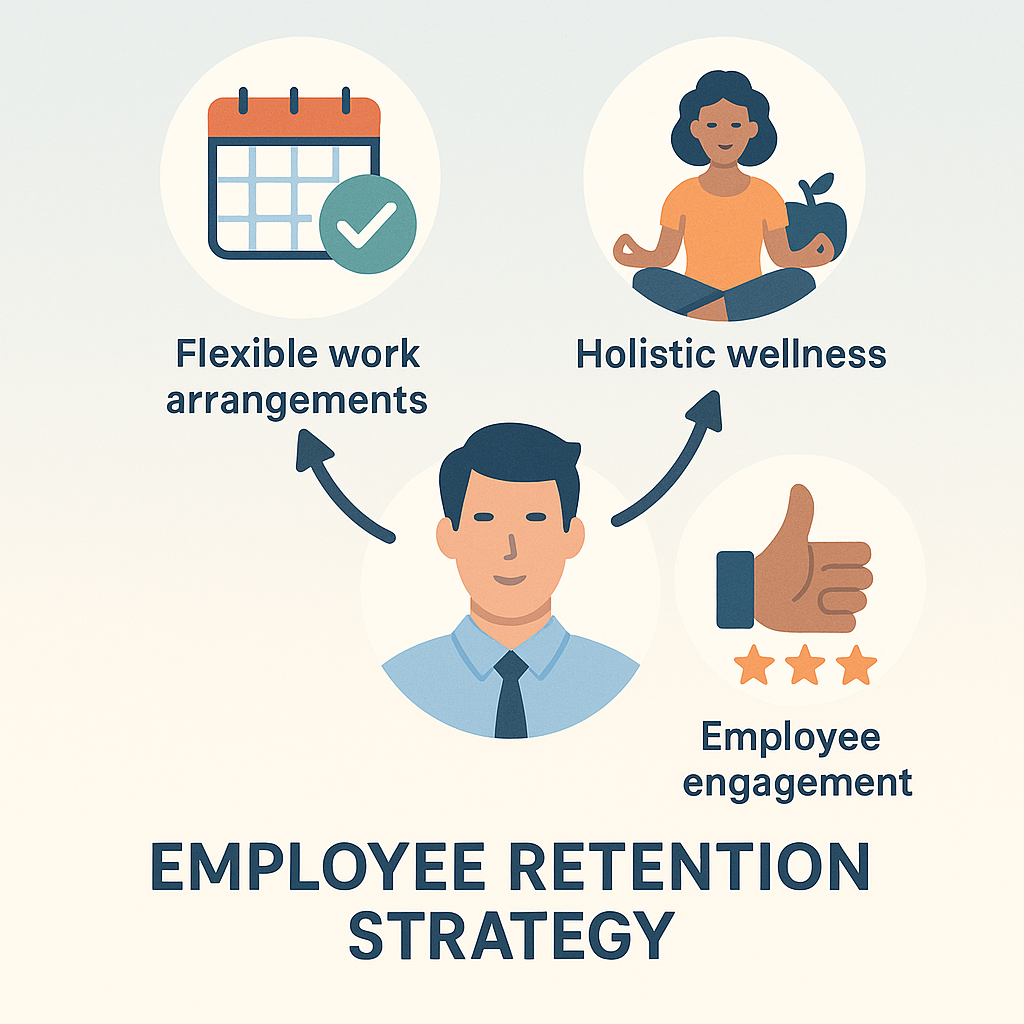
Employee wellness programs have shifted from a nice-to-have perk to a strategic priority for Canadian businesses of every size. Yet despite growing awareness, many HR leaders and business owners still struggle to answer two fundamental questions: what exactly does a wellness program include, and how do you actually pay for one? The gap between wanting to support employee health and knowing which funding vehicle to choose can stall even the most enthusiastic wellness initiative. This post breaks down the core components of employee wellness programs in Canada and maps out the practical funding options that make them financially viable.
At a high level, an employee wellness plan is a structured set of initiatives, benefits, and resources an employer provides to support the physical, mental, and financial well-being of its workforce. These programs range from simple gym membership subsidies to comprehensive platforms that cover everything from therapy sessions to ergonomic home office setups. The common thread is that the employer takes an active role in promoting health rather than leaving it entirely to individual employees.
The scope of wellness programs varies significantly depending on company size, industry, and budget. However, most corporate wellness programs share a recognizable set of categories.
Physical health: gym memberships, fitness class subsidies, annual health screenings, and nutrition counselling
Mental health: access to counselling or therapy, stress management workshops, and psychosocial support resources
Financial wellness: retirement planning sessions, debt management tools, and financial literacy seminars
Professional development: tuition reimbursement, online course subscriptions, and conference attendance support
Lifestyle and flexibility: remote work stipends, home office equipment allowances, and personal wellness days
The return on investment for employee wellness initiatives goes well beyond reduced sick days. Research consistently shows that wellness programs can improve employee engagement, support retention efforts, and contribute to a healthier workplace culture when implemented consistently and aligned with employee needs.
Companies that invest in wellness see measurable improvements in retention, engagement, and talent acquisition. In competitive labour markets like Toronto and Montreal, a well-structured wellness program can be the differentiator that attracts top candidates. Provincial variations also play a role: corporate wellness programs in Quebec, for example, may need to account for specific flexible benefits regulations, while workplace wellness programs in Toronto-based firms often compete on the breadth of mental health coverage they offer.
Knowing what to include is only half the equation. The bigger question for most employers is how to fund these initiatives in a way that is sustainable, tax-efficient, and easy to administer. Canadian businesses generally rely on one of four primary funding mechanisms, or a combination of them.
A Health Spending Account is a CRA-recognized, tax-advantaged benefit that allows employers to allocate a fixed dollar amount per employee for eligible medical and dental expenses. Employees submit claims for expenses not covered by provincial health plans or traditional group insurance, and the employer reimburses them from the HSA balance. The key advantage is that HSA reimbursements are a non-taxable benefit for the employee and a deductible business expense for the employer. This makes health spending accounts in Canada one of the most cost-effective ways to cover paramedical services, prescription drugs, vision care, and mental health support.
HSAs work especially well for small businesses that cannot afford full group insurance premiums. They give employers predictable cost control because the annual allocation is capped per employee, and unused funds can often roll over depending on the plan design.
While HSAs are limited to CRA-eligible medical expenses, wellness spending accounts cover a broader lifestyle category. WSAs fund expenses like gym memberships, fitness equipment, recreational sports leagues, ergonomic furniture, and even personal development courses. They are not tax-exempt in the same way HSAs are, as WSA reimbursements are typically treated as a taxable benefit. However, they offer something HSAs cannot: flexibility to fund the non-medical activities that contribute to holistic well-being.
Personalized wellness spending accounts have become increasingly popular because they let each employee choose how to spend their allocation based on their own priorities. A new parent might use it for a massage therapy course, while a remote worker might invest in a standing desk. This personalization is a major reason wellness spending accounts vs traditional benefits comparisons so often favour the WSA model for engagement.
Many mid-sized and large Canadian companies do not choose one funding mechanism over another. Instead, they layer them. A common structure looks like this: traditional group insurance covers the big-ticket items such as hospital stays, major dental work, and long-term disability. An HSA then fills the gaps, covering CRA-eligible expenses that the group plan does not reimburse. A WSA sits on top, funding the lifestyle and wellness categories that fall outside traditional insurance altogether.
This layered approach lets employers build a comprehensive benefits package without relying solely on expensive group insurance premiums. It also gives employees more control, which consistently ranks as a top driver of benefits satisfaction in Canadian workforce surveys. Employers using platforms like GoKlaim can manage all three layers from a single dashboard, setting department-level allocations and tracking usage through built-in analytics.
Moving from concept to execution requires a clear plan. The good news is that modern benefits platforms have dramatically reduced the administrative burden of launching a wellness program. Here are the key steps Canadian employers should follow.
Before selecting a funding vehicle, survey your workforce. Understanding what employees actually want prevents you from investing in initiatives nobody uses. A quick pulse survey asking employees to rank categories like fitness, mental health, professional development, and financial wellness gives you data to allocate budgets where they will have the most impact. For companies exploring budget-friendly health and wellness programs, even a modest annual allocation of $500 to $1,000 per employee through a WSA can meaningfully boost morale and retention.
Tax planning should happen early in the process. Since HSA reimbursements are non-taxable and WSA reimbursements are taxable, the split between the two accounts affects both the employer's deduction strategy and the employee's net benefit. Consulting the CRA's guide on taxable benefits can clarify which expenses fall into which category and help avoid compliance issues down the road.
Administration used to be the biggest barrier to offering flexible wellness benefits. Tracking paper receipts, manually processing reimbursements, and reconciling accounts consumed HR hours that small teams simply did not have. Today, platforms handle the entire workflow digitally. Employees submit claims through a mobile app, uploads are verified, and reimbursements are processed automatically. GoKlaim, for instance, lets employers customize eligible expense categories per account, set rollover rules, and generate usage reports without touching a spreadsheet.
Rolling out the program effectively is just as important as choosing the right funding structure. Communicate clearly what is covered, how to submit claims, and what the timelines for reimbursement look like. A short onboarding session, even a 15-minute video walkthrough, can prevent a flood of support tickets in the first month. Companies that offer employee benefits for small businesses often find that clarity at launch is the single biggest factor in adoption rates.
Employee wellness programs are no longer reserved for large corporations with deep pockets. With the right combination of HSAs, WSAs, and modern administration tools, Canadian companies of any size can offer meaningful, personalized wellness support while keeping costs predictable and tax-efficient. The key is to start with employee needs, match those needs to the right funding vehicle, and use a platform that removes the administrative friction.
Ready to build a flexible wellness program for your team? Explore GoKlaim's spending account solutions and get started today.
Employee wellness programs are employer-sponsored initiatives that support workers' physical, mental, financial, and lifestyle well-being through benefits, resources, and funded activities.
Employers allocate a fixed annual dollar amount per employee, who then submits receipts for eligible wellness expenses and receives reimbursement through the account.
Covered expenses depend on the account type: HSAs cover CRA-eligible medical costs like prescriptions and dental care, while WSAs cover lifestyle expenses like fitness memberships and professional development.
Most Canadian companies fund wellness programs through a combination of Health Spending Accounts, Wellness Spending Accounts, traditional group insurance, and flexible benefits platforms.
WSAs offer greater personalization and cost predictability for employers, making them a strong complement or alternative to traditional group insurance, especially for small and mid-sized businesses.
An HSA covers CRA-eligible medical expenses, while a WSA covers broader lifestyle and wellness expenses.
Many employer-sponsored wellness expenses may qualify as deductible business expenses, depending on their structure.
Budgets vary, but many employers start with an annual allocation per employee and adjust based on utilization and workforce size.